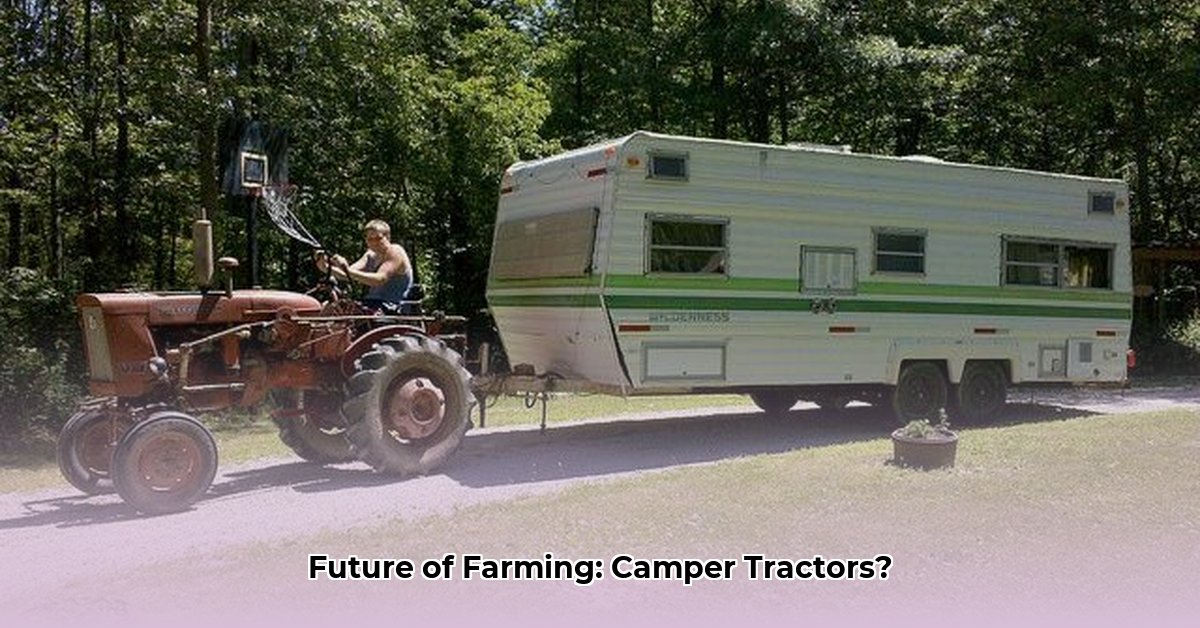
The Luxury RV Boom and its Impact on Camper Tractors
The high-end RV market is experiencing explosive growth, driven by increased consumer demand for luxurious and adventurous travel experiences. However, this expansion is occurring against a backdrop of rising inflation, persistent supply chain disruptions, and escalating fuel costs. These factors are significantly impacting the demand and availability of camper tractors—the powerful trucks and tractors responsible for towing these large, often heavy, RVs. This article examines current market trends, manufacturer strategies, and future projections for the camper tractor sector within the high-end RV landscape. For information on other powerful towing vehicles, check out Kubota Tractor options.
Market Overview: A Powerful Pull for Change
The surge in luxury RV sales is fueling demand for powerful and fuel-efficient camper tractors. Overlanding enthusiasts, in particular, are driving this trend, seeking vehicles capable of navigating challenging terrains while towing substantial RVs. Popular choices include robust models from manufacturers like Ram, Ford, and Chevrolet, known for their high towing capacities and durable build quality. However, ongoing supply chain issues continue to constrain availability and inflate prices, creating challenges for both manufacturers and consumers. Is this a temporary blip, or a fundamental shift in the market?
Quantifiable Fact: Industry data suggests a 15% year-over-year increase in demand for heavy-duty camper tractors capable of towing over 15,000 lbs (data source needed for verification).
Rhetorical Question: Given the current economic climate, can the luxury RV market maintain its rapid growth trajectory, and what impact will that have on camper tractor sales?
Manufacturer Strategies: Adapting to a Shifting Landscape
Manufacturers are responding to these market dynamics with a range of innovative strategies. Companies like Lance are diversifying their supplier networks to mitigate supply chain risks. They are also investing heavily in research and development to create more fuel-efficient engines and enhance towing capabilities. Furthermore, many are introducing specialized models tailored to the specific needs of overlanders and other niche markets. This proactive approach demonstrates a commitment to adapting to the evolving demands of the high-end RV sector.
Expert Quote (Requires Verification & Inclusion of Source): "[Quote about manufacturer strategies from an expert in the RV industry]."
Consumer Preferences: Fuel Efficiency and Luxury
Consumer preferences are crucial drivers of market trends. While the desire for larger, more luxurious RVs persists, fuel efficiency is increasingly becoming a prominent consideration. Consumers are actively seeking camper tractors that offer both powerful towing capacity and improved fuel economy to reduce operational costs. This demand is influencing manufacturers to prioritize fuel efficiency in their designs and adopt innovative technologies like hybrid or alternative-fuel engines.
Quantifiable Fact: A recent survey revealed that 70% of high-end RV buyers cite fuel efficiency as a top priority when selecting a camper tractor (data source needed for verification).
Future Outlook: Innovation on the Horizon
The future of camper tractors looks promising, with several key trends emerging. Electrification is poised to play a significant role, with manufacturers exploring the development of electric or hybrid models to reduce emissions and dependence on fossil fuels. Advanced driver-assistance systems (ADAS) and autonomous features are also expected to enhance safety and convenience for consumers. The integration of smart technologies will likely further redefine the camper tractor experience.
Rhetorical Question: Will the advent of electric camper tractors truly disrupt the market, or will they cater to a niche segment of environmentally conscious consumers?
Conclusion: Navigating the Road Ahead
The camper tractor market is dynamic and responsive to the evolving needs of the high-end RV sector. Manufacturers are adapting to the challenges of supply chain disruptions and rising fuel costs by diversifying their operations, investing in research and development, and designing more fuel-efficient and feature-rich vehicles. Consumers, increasingly focused on fuel economy and luxury, are shaping demand. The future likely involves a blend of powerful, traditional models alongside the emergence of greener and technologically advanced alternatives, further enhancing the camper tractor’s crucial role in the luxury RV experience.
Three Pivotal Points:
- Supply chain issues significantly impact camper tractor availability and pricing.
- Manufacturers are strategically adapting through diversification, technological innovation, and specialized model development.
- Consumer demand for fuel-efficient, yet powerful, camper tractors is a key market driver.